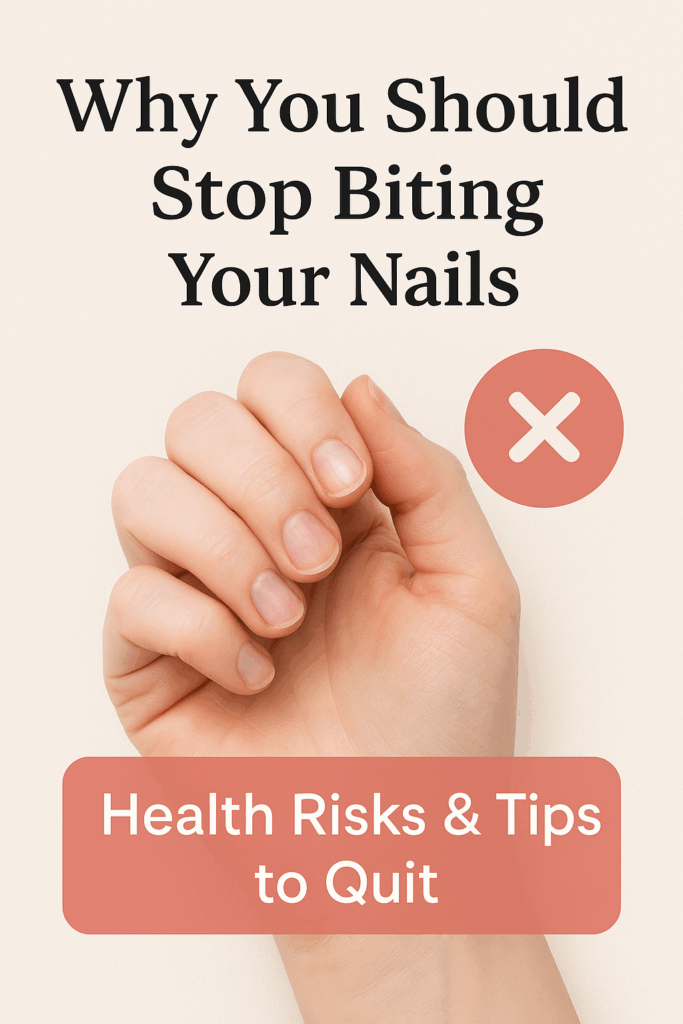
Nail biting is a common habit that affects both children and adults. For many people, it starts in childhood and continues into adulthood due to stress, boredom, or emotional triggers like frustration and anxiety.
Although it might seem harmless, frequent nail biting can have serious effects on your health, appearance, and overall well-being.
Why People Bite Their Nails
Many nail biters do it as an unconscious response to:
- Stress or anxiety
- Boredom or frustration
- Loneliness or nervous tension
In some cases, chronic nail biting may be linked to psychological conditions such as Obsessive-Compulsive Disorder (OCD) or other behavioral conditions like ADHD or anxiety disorders.
Health Risks of Nail Biting
Here are some important reasons to stop this habit and protect your health:
1. It Spreads Bacteria and Germs
Your fingernails can harbor bacteria such as E. coli and Salmonella. When you bite your nails, these germs can transfer to your mouth and body, increasing your risk of infections, colds, or flu.
2. It Causes Nail Infections
Nail biters are more likely to develop paronychia, an infection that affects the skin around the nails. This condition can cause swelling, redness, and pus, and in some cases may require medical attention.
3. It Can Lead to Warts
Chronic nail biting increases the risk of HPV (human papillomavirus) infections, which can cause warts on the fingers and around the mouth.
4. It Damages Teeth
Biting nails can affect the way your teeth align (dental occlusion). Over time, it may cause chipped teeth, jaw pain, or premature tooth wear.
5. It Lowers Your Quality of Life
Studies show that people who bite their nails often experience stress, embarrassment, and anxiety about their appearance. Damaged nails can make you feel self-conscious and even impact your confidence.
6. It Causes Painful Hangnails
Biting your nails dries the surrounding skin and can lead to hangnails—painful skin tears that can easily get infected.
7. It Leads to Ingrown Nails
Frequent biting may cause ingrown nails, which can become red, swollen, and painful. Severe cases may even require medical treatment.
8. It Increases the Risk of Colds and Illness
Every time you bite your nails, you’re potentially introducing viruses and bacteria into your mouth. This can lead to respiratory infections, cold sores, and even hepatitis in rare cases.
Tips to Stop Nail Biting
Quitting may not be easy, but these strategies can help you break the habit for good:
- Keep your nails short. Short nails are less tempting to bite.
- Get regular manicures. When your nails look good, you’ll be less likely to ruin them.
- Use a bitter-tasting nail polish. The unpleasant flavor helps discourage biting.
- Manage your stress. Try deep breathing, yoga, or meditation to stay calm.
- Wear gloves or bandages. Covering your nails can physically block the habit.
Final Thoughts
Nail biting might seem like a small habit, but over time, it can affect your health, appearance, and confidence. By becoming more aware of your triggers and using positive coping techniques, you can stop biting your nails and enjoy stronger, healthier hands.